For the first time ever, a Women’s Suffrage flag will be raised on the forecourt of Parliament.
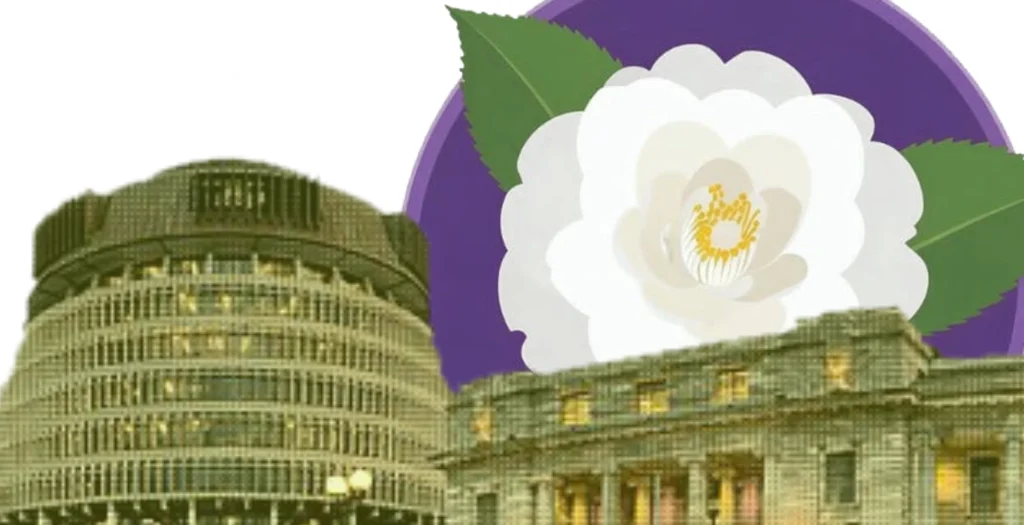
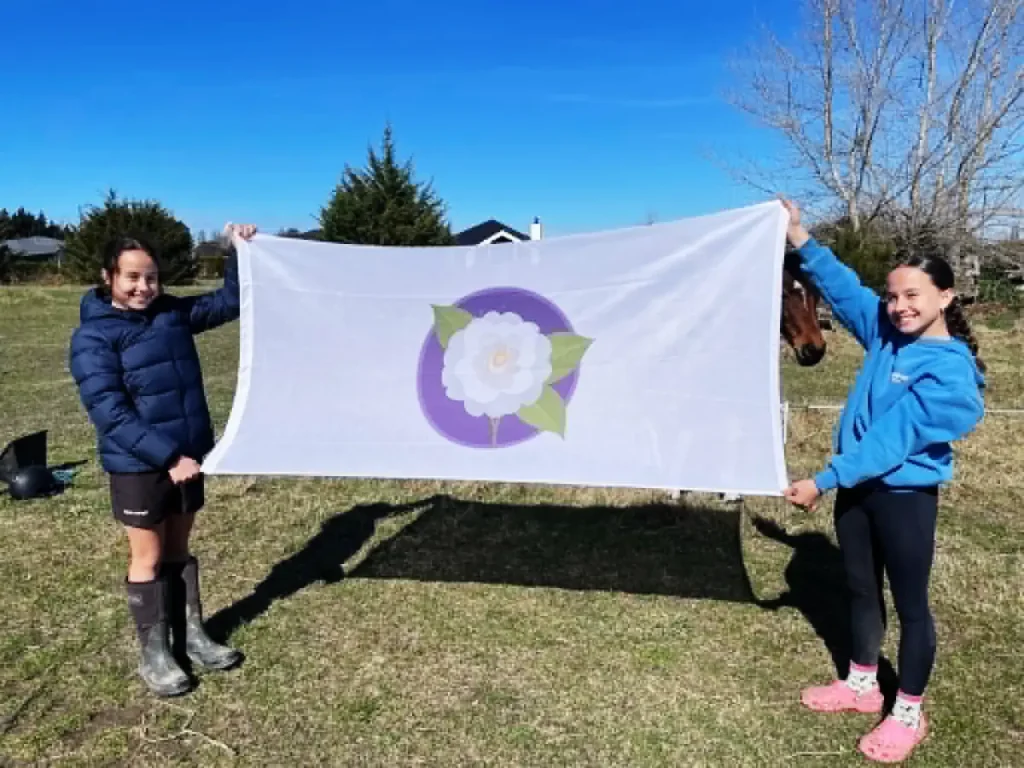
At 8.30am tomorrow [Thursday 17 September] a uniquely New Zealand flag symbolising the long struggle to win the right to vote by women, and some men, will be raised.
Women’s Rights Party co-leader Jill Ovens says her Party, along with Māori women’s group Mana Wāhine Kōrero, will be there to support Christchurch woman Katrina Biggs in the pursuit of her goal to have Women’s Suffrage Day commemorated with a flag flown at Parliament.
The flag bears the symbol of the white camellia handed out to supportive Members of Parliament in 1893 when the vote passed by a majority in the Lower House, and then passed by just two votes in the Upper House, narrowly defeating the influential liquor lobby that heavily influenced those in the Upper House.
Eighteen legislative councillors petitioned the new governor, Lord Glasgow, to withhold his consent in enacting the law, but on 19 September 1893 the governor consented and the Electoral Act 1893 gave all women, including Māori women, aged 21 or older, the right to vote.
New Zealand became the first self-governing country in the world where all adult women gained the right to vote in general elections.
Kate Sheppard, a leader in the Women’s Christian Temperance Union, Dunedin trade unionist Harriet Morison, and Mere Mangakāhia were amongst the drivers of this achievement.
Jill Ovens says women were not ‘given’ the vote – they organised rallies, they knocked on doors to collect signatures on petitions, they had branches all over the country that organised support locally, they lobbied MPs, and by 1893, they had garnered considerable popular support.
“It took seven years of campaigning, and close to 32,000 signatures – almost a quarter of the adult European female population at the time –before that bill was finally passed,” Jill Ovens says.
“It wasn’t the end of the struggle. It would be another 40 years before another Christchurch woman, Elizabeth McCombs, became New Zealand’s first woman MP, with women winning the right to stand for Parliament in 1919 but facing huge discrimination as women were considered to be unsuitable for the world of politics.”
Raising a Suffrage flag at Parliament didn’t come easily either. Katrina Biggs spent a year negotiating with the Speaker’s Office for the right to commemorate women’s suffrage in this way. Approval was finally given in mid-August.
Katrina Biggs says the new flag is as symbolic of the milestone that gaining the vote was for women.
“That right benefitted all women, irrespective of status or political persuasion, and is a shared achievement for our country,” she says.
Katrina Biggs has invited representatives from parties across the political spectrum, both inside and outside Parliament, to attend the historic event, which is being held on the closest sitting day for Parliament to Suffrage Day, which this year is Thursday 17 September.
Minister for Women Nicola Grigg has responded saying she “would be delighted to attend” the inaugural raising of the flag. Members of the public are also welcome.
The final petition, which is the only surviving one presented to the House of Representatives, gathered a little over 25,500 signatures, and can now be seen at the National Library in Wellington. The National Library, nearby to the Beehive, is conducting a special tour at 10.30am on the same day as the inaugural raising of the Women’s Suffrage flag, which will focus on the suffrage petition.