Prue Hyman
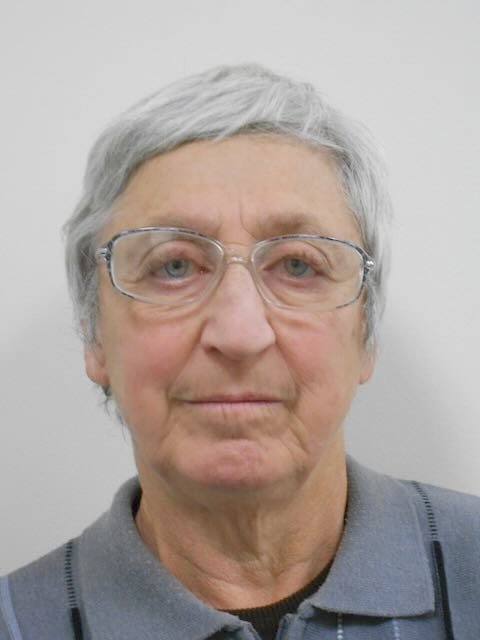
Meet Prue Hyman
Prue Hyman is a lesbian feminist activist who, in her working life, was a feminist economics academic at Victoria University of Wellington. Her areas of research spanned feminist economic theory, labour force participation, earnings, industrial relations, income maintenance, housing, the position of older women, international issues, and lesbian issues.
She has worked for and consulted to the New Zealand Ministry of Women’s Affairs, helped organise the New Zealand Women’s Studies Association, and served on the Board of the International Association for Feminist Economics. Prue says that ageing—and becoming increasingly impatient to achieve positive change—has allowed her, in retirement, to be more outspoken about what she sees as the errors of orthodox neoclassical economics. This includes what she describes as the undervaluation of women’s paid and unpaid work as a key aspect of the power system that orthodox economics supports.
Prue continues to write and speak on a wide range of theory and policy issues. Her publications include the 1994 book Women and Economics: A New Zealand Feminist Perspective and the 2017 Bridget Williams Texts volume Hopes Dashed: The Economics of Gender Inequality. One of her main areas of specialisation is the gender pay gap and earnings differentials more generally. Her work on these issues was used to assist lawyers and unions in the Kristine Bartlett v Terranova Equal Pay Act case, as well as the Living Wage campaign.
Prue argues that women’s progress has been slow and uneven—one step forward through greater education and a wider range of jobs, and nearly one step back through individualism, discrimination, and lower unionisation. She says lower-paid women are particularly disadvantaged, with class and ethnic discrimination contributing to wider pay gaps for Māori and Pacific women than for Pākehā women.
She argues that general economic policies often have more impact than gender-specific ones, and that paying adequate wages is crucial. In her view, minimum wage, Living Wage, and pay equity campaigns are therefore vital. She says her “50% nightmare” would be a world where women held half of the top positions while nothing else had changed for lower-paid women. She argues that the broader economic system matters more than the actions of individual employers.
Prue argues that income differentials in the labour market are far wider than can be justified by productivity differences. She says top salaries should fall, lower salaries should rise, and labour rewards overall need strengthening. She also argues that sole parents—most of whom are sole mothers—continue to be treated unfairly, and that greater equality for women in the labour market benefits men and children as well, including fathers who want more time with their families.
She says feminism is not dead, pointing to young feminists and feminists in countries with fewer rights as a continuing source of inspiration. She argues that feminist and other non-orthodox economic analysis is important for addressing inequality, climate change, and environmental challenges, and that reducing inequality within and between countries is essential.
Prue says the Women’s Rights Party’s policies align with these concerns while also focusing on what she describes as a backlash against women’s and lesbian rights arising from parts of the transgender political movement. She distinguishes between sex and gender and argues that sex cannot be changed.
Prue says that people who identify as transgender deserve full human rights, but not at the expense of women’s rights. She argues that women-only and lesbian-only spaces should remain available in places such as changing rooms, sport, social settings, and prisons.
She also argues that collecting statistics by gender identity rather than biological sex would undermine measures such as the gender pay gap and data on violence against women and children. She says that protecting freedom of speech on these issues is essential and warns against suppressing differing viewpoints.
We are the only political party in New Zealand that puts women first.
Join