No one should be surprised that yesterday’s pay equity ruling mentions the word “sex” in connection with women’s rights to pay inequity.
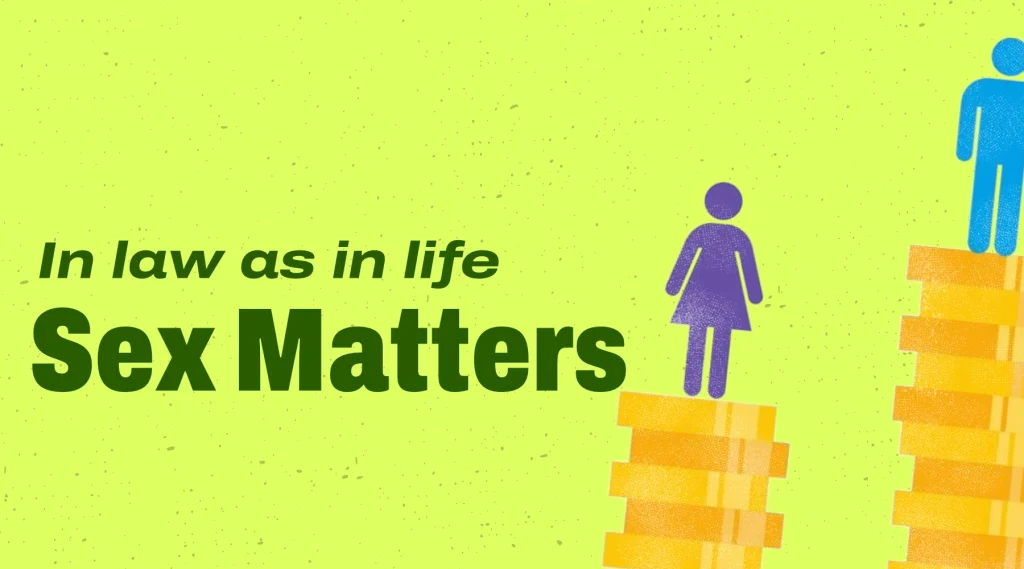
Yesterday’s High Court ruling found that the Coalition Government’s changes to the Equal Pay Act discriminated against women and were inconsistent with the Bill of Rights Act.
Specifically, the Court found that amendments in 2025 to the Equal Pay Act 1972 were inconsistent with the right in section 19(1) of the Bill of Rights Act to be free from discrimination on the ground of sex.
Section 19(1) of the Bill of Rights Act says:
“Everyone has the right to freedom from discrimination on the grounds of discrimination in the Human Rights Act 1993.”
The prohibited ground of discrimination relied on here was “sex”. The Court found that s 19(1) is capable of including the right to be free from pay inequity. Further, s 19(2) allows for “measures to be taken in good faith for the purpose of assisting or advancing persons or groups of persons disadvantaged because of discrimination”, in this case of women workers because of assumptions and stereotypes based on their sex.
Despite frequent references to the “gender pay gap” due to pay inequity, the Equal Pay Act 1972, and its amendments, does not mention the word “gender”, Women’s Rights Party Co-leader Jill Ovens says.
“It is all about ‘sex’. The Equal Pay Act, which contains the provisions relating to pay equity, is an ‘Act to make provision for the removal and prevention of discrimination, based on the sex of the employees, in the rates of remuneration of males and females in paid employment.’, Ms Ovens says.
“The Act in all its subsequent amendments has never sought to reinterpret the word ‘sex’ in ‘sex discrimination’ to mean ‘gender’, a concept that is not defined in law.”
The Act covers both pay equity and pay equality. Pay equality is the principle that there should be no difference on the basis of sex between the rates that are paid by an employer to its male and female employees.
Pay equity looks beyond an employer’s particular employees. It looks more broadly to comparators in the marketplace to ensure that work performed predominantly by women is not undervalued and therefore underpaid, a material disadvantage.
The Court found that material disadvantage had been caused through the changes to the scheme causing existing pay equity claims to be terminated, increasing the threshold for pay equity claims to be brought, preventing pay equity issues to be identified and addressed for 10 years following settlements, preventing the use of comparators outside of claimant groups’ industries or sectors and by making the process more burdensome for claimants pursuing qualifying claims.
In his judgement, Justice Paul Radich said the changes were made mainly to save money, rather than fix a broken system.
The declaration of inconsistency does not revoke last year’s changes to the law or restore the extinguished claims, but the next government will have to issue a formal response to be debated by MPs. The Crown could also yet appeal.
Pay Equity legislation allows for claimants and male comparators to be evaluated against agreed factors following interviews with role holders.
The factors take into account things like level of qualifications required, skills required (could be fine skills like suturing), emotional demands (as in work that involves caring for people), exposure to hazards, and more.
Some male-dominated occupations might score highly against certain factors, while female-dominated occupations might score highly on others. They might score the same, but for different reasons, e.g. different types of hazards.
Within occupations there are differences, e.g. a registered nurse or a senior nurse or a nurse practitioner, and different male comparators will be more similar than others to one or more of these roles.
The employer and union parties to the pay equity claim might disagree on the choice of comparators. They might disagree on the weightings given. In regulated workforces, there might be different understandings about the regulations pertaining to that sector.
That is why pay equity claims can take five years or more to settle. However, the parties are required to act in good faith towards each other and try to reach agreement. There are milestones to be met along the way.
At the end of the process there is a negotiation between the employer(s) and the union(s) as to the extent of the undervaluation based on the evidence, and what is needed to address any pay differential.
END
NOTE: Ms Ovens led the midwives pay equity claim as Co-leader (Industrial) for MERAS, the union for employed midwives, between 2017 and 2023.